
A high-dollar parts sale can look like a win until the cardholder disputes it and the dealership is left with neither the payment nor the merchandise.
Fixed ops and parts departments routinely sell products that are valuable, in demand, and easy to resell: tires, wheels, performance parts, accessories, electronics, and other OEM components. That makes them a recurring target for payment fraud, especially when an order is placed remotely, paid for with a card that isn’t physically present, or picked up by someone other than the cardholder.
The cost doesn’t stop at the merchandise. A fraudulent transaction brings chargeback fees, lost technician and advisor time, shipping losses, and inventory gaps. If the dealership can’t produce documentation proving the cardholder authorized the purchase, getting the funds back is an uphill fight.
The goal here isn’t to slow down legitimate customers. It’s to give parts counter, service lane, and accessories staff a consistent way to spot risk and verify questionable transactions before product leaves the building.
Why Dealership Parts Departments Are a Fraud Target
Tires, wheels, catalytic converters, truck accessories, electronics, and performance components share three traits fraudsters look for: high value, strong demand, and fast resale. A stolen card buys the part, and the fraudster arranges immediate pickup, expedited shipping, or delivery to an address that’s hard to trace back to the cardholder.
An approval code can create false confidence. It confirms the card had available credit and wasn’t flagged at that moment. It does not confirm the person buying the part is the actual cardholder, and it does not protect the dealership if the transaction is disputed later.
Warning Signs of Dealership Payment Fraud
No single detail proves fraud. Several of these showing up together should trigger a closer look:
- An unusually large first-time order
- Multiple sets of identical tires, wheels, or high-value parts
- Little concern about price, fitment, warranty, or return policy
- Requests for rush processing, overnight shipping, or immediate pickup
- A card name that doesn’t match the customer or the repair order
- A request to split the purchase across several cards
- Multiple cards tried before one clears
- A shipping address that doesn’t match the card’s billing address
- A friend, courier, or rideshare driver sent to collect the order
- Impatience or pushback when asked to verify identity
- Communication limited to text or email, avoiding a phone call
- A request to skip the dealership’s standard payment process
Fraudsters create urgency because they don’t want your team to pause and think. A legitimate customer generally understands why a high-value purchase gets extra scrutiny.
Card-Present Transactions Are Your Strongest Protection
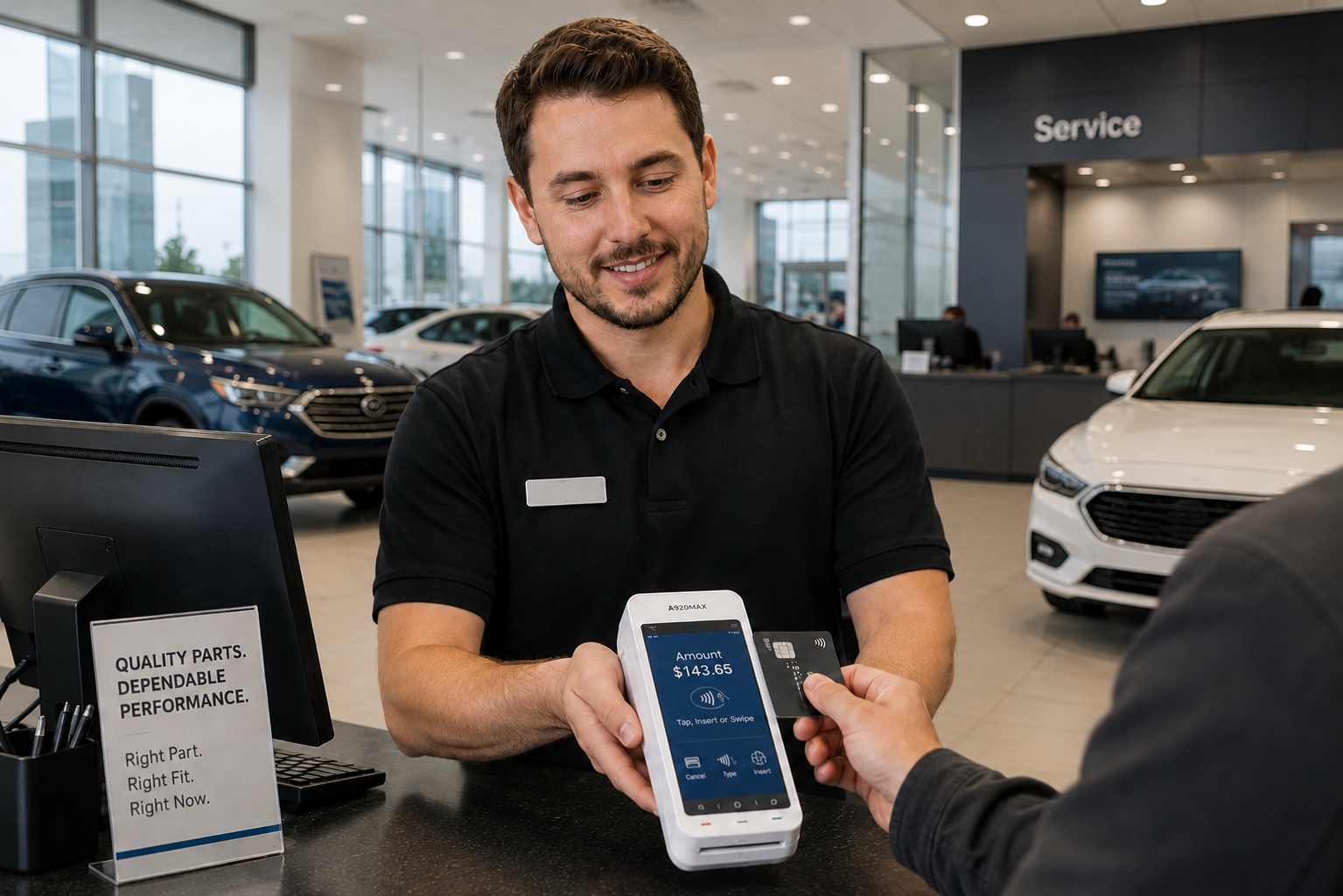
Whenever it’s an option, run high-dollar transactions in person on an EMV chip-enabled reader. Chip transactions carry stronger security than a manually keyed card number, and staff should never bypass the chip reader because a customer claims the card “isn’t working.” If a card can’t be processed through the normal workflow, stop and escalate. Don’t work around it.
Where dealership policy and card network rules require it, confirm that ID, payment card, repair order, and invoice all line up before the sale closes.
No single control stops every fraud attempt, but running the transaction through the most secure method available puts the dealership in a much stronger position if a dispute comes later.
Remote Payment Fraud: Extra Controls for Phone and Online Orders
Phone orders, online payments, and payment links are convenient, but the card and cardholder aren’t physically present, so they need more scrutiny:
- Compare billing and shipping addresses
- Log the customer’s phone number and email
- Confirm the cardholder is the person authorizing the purchase with ID verification
- Use secure payment links, never card numbers collected over email or text
- Stay PCI DSS compliant and never store card data outside the Dealer Pay “Safe” tool within your Dealer Pay portal
Know Who’s Paying and Who’s Picking Up
Risk goes up any time the cardholder, the customer, the vehicle owner, and the person collecting the merchandise aren’t the same individual.
If a third party (a relative, employer, or fleet operator) is paying, document that relationship and put the cardholder’s name on the invoice. If someone other than the buyer is picking up the order, get written authorization from the customer through contact information already tied to the transaction.
At pickup, record:
- Name of the person receiving the merchandise
- Date and time
- ID reviewed, when applicable
- Signed acknowledgment of receipt
- Specific parts released, with part or serial numbers
Never release a high-value order to an unfamiliar courier based on a text from an unknown number.
Build a Fraud Review Process for High-Dollar Transactions
Fraud prevention shouldn’t depend on one employee happening to notice something off. Set a transaction threshold, by department or product type, that requires manager sign-off or added verification before the sale closes. At that threshold, staff should confirm customer and cardholder details, check AVS/security code results on remote payments, verify shipping or pickup information, and escalate anything unusual.
Apply the same standard across the parts counter, service lane, accessories department, and any online or centralized ordering you run. Consistency is what makes the process actually hold up, not just exist on paper.
Is your dealership’s payment process ready for the next suspicious transaction? Schedule a demo with Dealer Pay to see how a dealership-native payments platform protects revenue across your operation.