
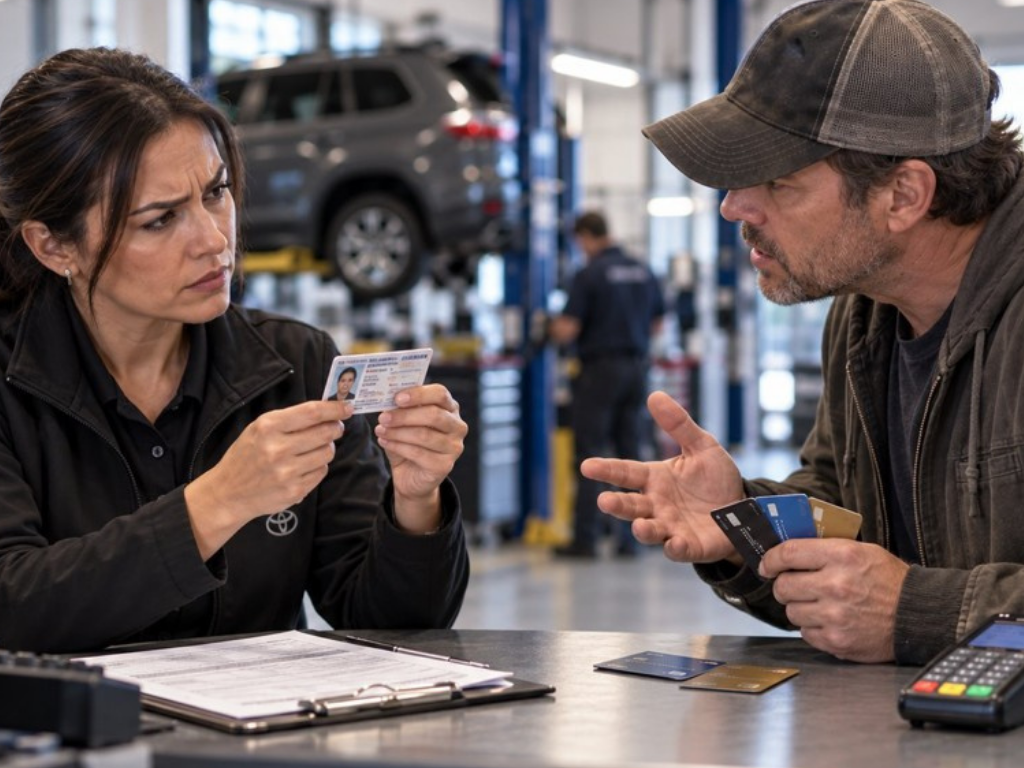
An approved payment can still become a loss after the vehicle leaves your dealership. For a service department that has already installed a set of tires, a chargeback can put the payment at risk after the parts and labor are gone. Accounting then must establish what happened, sometimes weeks after the transaction.
Dealerships depend on trust. Customers trust your team with their vehicles and payment information, and employees rely on each other to keep business moving. That trust needs consistent controls behind it, especially when a familiar customer or a busy afternoon makes an exception feel reasonable.
A well-managed payment process helps you identify risk before releasing a vehicle or parts, while preserving the evidence needed if a charge is challenged later. It also gives customers a clear record of what they authorized, protecting the relationship along with the revenue.
Recognize the three forms of fraud
Fraud can enter through a customer interaction or an employee account. Each route calls for different safeguards.
- Friendly fraud: A customer disputes a legitimate purchase, such as a repair, deposit or parts order. Some cases involve deliberate misuse of the dispute process; others begin with confusion about a charge. A complaint alone doesn’t establish fraud, so review the transaction before drawing conclusions.
- External fraud: Someone uses stolen payment credentials or a false identity. A card approval doesn’t establish that the person paying is the authorized cardholder. A remote parts order with an unexpected pickup arrangement deserves review even if the payment goes through.
- Internal fraud: An employee misuses access to issue unauthorized refunds or manipulate transactions, sometimes with help from someone outside. Shared logins and unrestricted refund authority can make the activity harder to trace.
The 2026 Global eCommerce Payments & Fraud Report found that 64% of surveyed merchants reported an increase in first-party misuse, often called friendly fraud, over the previous year. The finding covers global eCommerce merchants across industries; it signals a broader dispute challenge that dealerships should account for in remote payment workflows.
Give employees a clear reason to pause
High-value transactions and handoffs between departments make consistent verification especially important. Set expectations for when employees should stop and who can authorize the next step.
Warning signs worth reviewing include:
- Repeated declines followed by attempts with different cards.
- Pressure to release a vehicle or parts before completing normal checks.
- Customer information that doesn’t match, or resistance to verification.
- Unexpected changes to pickup or delivery arrangements.
These signals should trigger a defined review, with a designated manager available to resolve it. Document the decision and any exception so the next employee can see why the transaction proceeded.
Payment technology can support that judgment. Visa’s July 2026 guidance describes how fraud scoring can assess transaction risk before authorization and trigger additional checks. Ask your provider which signals employees can see and what action each alert requires.
Make internal controls part of daily operations
The Association of Certified Fraud Examiners’ 2026 Report to the Nations found that more than half of the occupational fraud cases studied involved missing controls or existing controls being overridden. Across industries, management review and proactive monitoring were associated with lower losses and faster detection.
For dealerships, that supports a practical starting point: give each employee an individual login and limit access to the functions their role requires. Establish approval thresholds for refunds, with a separate reviewer for exceptions.
Review refund activity regularly for unusual patterns and make sure permissions change when employees move roles or leave. Controls only work when managers follow them too; an undocumented override creates the same gap regardless of who requests it.
Build the evidence while the transaction is happening
A receipt only proves that a payment was processed. Depending on the dispute, you may also need evidence of what the customer authorized or received. Capture that information as part of the transaction, while everyone involved is still available.
Keep the relevant records connected to the RO, parts ticket or deal:
- Signed repair orders and approval of any additional work.
- Itemized invoices, payment authorization records and receipts.
- Acknowledged deposit, refund or cancellation terms where applicable.
- Pickup or delivery confirmation, timestamps, and relevant customer communications.
If you were to select a transaction from several weeks ago, would accounting be able to retrieve its supporting records? If the answer depends on an advisor’s memory or a search through separate systems, you have a documentation gap to close.
DMS connectivity can help keep payment records associated with the underlying transaction. Confirm which documents are retained and how they can be retrieved; a posted payment alone doesn’t establish that the full record is available.
Evaluate what happens around the payment
Your processor should be able to explain how its tools support prevention and dispute response. Ask for a demonstration using a dealership scenario, such as a remote parts purchase or a disputed service payment.
- What happens when a transaction looks suspicious? Confirm when alerts appear, what they explain, and who can override them.
- How are remote payments verified? Understand the checks available for card-not-present transactions and which are enabled for your dealership.
- Can sensitive actions be restricted and reviewed? Look for individual permissions and a record of refunds or other transaction changes.
- What support is available when a dispute arrives? Confirm evidence retrieval, response deadlines and who helps prepare the response. Ask exactly what any chargeback protection covers and the conditions that apply.
Protect the customer relationship
Customers should understand the amount they’re paying and the terms attached to it. Give them a detailed receipt and a clear way to reach someone who can resolve a question. Visa’s May 2026 dispute-management guidance notes that some disputes begin with confusion and that early resolution can help protect customer relationships.
Review disputes for their cause, then use what you learn to improve the process. An unclear deposit policy calls for a different response than stolen credentials or an unauthorized employee refund.
The strongest payment process makes it easy for staff to follow the right steps and for customers to understand the transaction. That’s how a dealership earns trust while protecting the revenue behind it.
Ready to learn more? Schedule a call with a payments expert.